






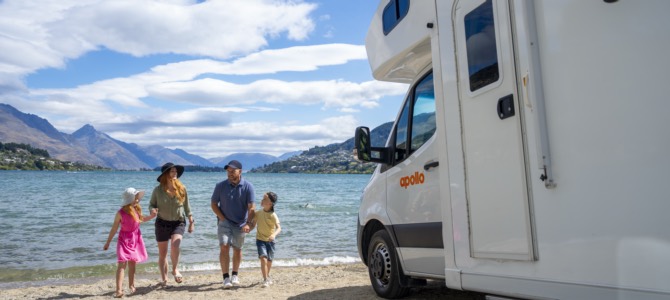
First-Time New Zealand Campervan & Motorhome Guide
Booking a motorhome for New Zealand is the ultimate dream until the real questions start piling up: What size vehicle should I choose? Where can I sleep legally? How many kilometers should I plan per day? And above all, how do I avoid the classic mistakes of a first-time campervan trip? This first-time motorhome guide is designed for travelers who want to enjoy the absolute freedom of the open road without turning their holiday into a logistical headache.
The great news is that New Zealand is tailor-made for motorhome travel. Scenic routes are endless, dump stations and holiday park networks are world-class, and creating an itinerary packed with breathtaking landscapes is incredibly easy. The catch? A first-time motorhome journey requires a bit more upfront preparation than a standard rental car and hotel road trip. Your comfort on the road depends heavily on the choices you make before you fly.
Choosing the Right Vehicle for Your Travel Style
The golden rule is to choose a vehicle that fits how you travel, not just your budget.
-
The Space Trap: A couple might be tempted by a cheaper, compact model, only to deeply regret the lack of indoor living space after three consecutive days of rain.
-
The Size Trade-off: Conversely, a large 6-berth motorhome offers incredible comfort for long trips or family travel, but it costs more upfront, consumes more fuel, and requires a lot more confidence when maneuvering or parking.
In New Zealand, the perfect compromise is based on three simple factors: trip duration, the season, and your expected level of comfort. For a quick one-week getaway, a compact van is perfectly fine. For a two- to three-week journey—especially if you carry large suitcases or travel with family—the extra space of a motorhome completely transforms the experience.
🔋 Look closely at the specs: Not all self-contained vehicles offer the same level of actual autonomy. Features like the size of the water tanks, a built-in heater, real storage, and a functional kitchen matter far more than saving a few dollars at booking. We regularly see basic self-contained vans that are forced to stay at paid campsites every single night because their house battery cannot hold a charge for more than 24 hours or the water tanks are too small.
Itinerary Planning: How Much Time Do You Actually Need?
The single most common mistake first-time travelers make is trying to see and do too much. On a map, New Zealand looks relatively compact. On the road, driving times are much longer than anticipated due to winding mountain passes, single-lane bridges, frequent photo stops, and driving through small country townships. Motorhomes are also driven much more conservatively than cars.
💡 Pro Tip from a Local Expert:
When mapping out your driving hours, always calculate your average speed at roughly 60 km/h (37 mph).
This is the safest benchmark for realistic motorhome itinerary planning.
If you have less than two weeks, stick to one island.
-
The South Island is world-famous for its massive alpine landscapes, turquoise lakes, fiords, and dramatic driving legs.
-
The North Island is highly underrated but offers an incredibly diverse mix of geothermal wonders, golden beaches, rich Māori culture, and driving distances that are often much easier to manage.
With 10 to 12 days, focus entirely on either the North or South Island. Combining both islands only becomes realistic with a minimum of three weeks, and even then, it requires a steady, fast-paced rhythm. The best holiday isn't the one that ticks off the most locations, but the one that leaves room for spontaneous detours. We constantly get feedback from clients saying, "If I could do it over again, I would have planned fewer stops and driven less."
Finding the Right Daily Pace
A comfortable baseline for a first-time trip is 150 to 240 kilometers on driving days. Leaving some days completely driving-free or short is exactly where the holiday gets better. It gives you the time to enjoy hikes, explore local coastal villages, take in viewpoints, and handle routine holiday admin like emptying waste tanks, grocery shopping, or doing laundry.
An overly tight schedule quickly leads to travel fatigue. Remember to factor in the hours spent picking up the vehicle on day one, setting up your campsite at night, and packing things away securely before hitting the road each morning.
Overnight Stays: Understanding Where You Can Legally Sleep
Many first-time visitors assume that renting a certified Self-Contained vehicle means they can pull over and sleep anywhere for free. In New Zealand, this is a myth. While freedom camping is legal in dedicated zones, it is heavily regulated by local councils, and rules change from one district to the next. Never assume a beautiful lakeside pull-off allows overnight stays.
For a first trip, mixing your nights between different campsite tiers is the best strategy:
1. Holiday Parks (Highly Recommended)
These are fully equipped commercial campgrounds. They offer powered sites to plug in your vehicle, communal kitchens, hot showers, laundrettes, and often playgrounds for kids. They are more expensive than free sites, but they provide ultimate peace of mind.
-
Stephane’s Note: This is my personal favorite way to travel. I log the Holiday Park coordinates into my GPS in the morning, and the stress is gone. I know exactly where I am going, no matter what time I arrive. Plus, my daughter loves using the holiday park playgrounds and grabbing an ice cream from the campsite shop!
2. Department of Conservation (DOC) Campsites
DOC sites are perfect for travelers looking for a raw, natural setting and a lighter impact on the budget. They are located in beautiful conservation areas, national parks, and forest reserves. While incredibly scenic, their facilities are basic (often just drop toilets and water non-potable without boiling). They are great for a night or two to experience true kiwi wilderness, but less ideal if you want hot showers every single evening.
Be Realistic About Your Camping Style
Before paying a premium for a high-end self-contained vehicle with solar panels, massive water tanks, and gas fridges designed for off-grid living, ask yourself honestly: Am I really going to freedom camp every single night? We frequently see families invest heavily in off-grid setups only to stay at fully powered holiday parks nearly every night of their trip because they prefer the comfort of onsite facilities.
Budgeting: Tracking the Real Costs of the Road
The base rental price is only one part of your overall travel budget. First-time travelers often overlook or underestimate these ongoing costs:
-
Fuel & Road User Charges (RUC): Diesel vehicles are often cheaper to rent but are subject to government road taxes based on kilometers driven.
-
The Cook Strait Ferry: Crossing between Wellington and Picton can add $350 to $700+ NZD depending on the length of your vehicle.
-
Campsite Fees: Ranging from $15 NZD per person at DOC sites to $80–$100 NZD per night for a family powered site at a premium holiday park.
-
Insurance and Excess: This is vital. Many visitors choose the lowest insurance tier to save money, only to realize they have a massive financial excess ($5,000+ NZD) frozen on their credit card and strict exclusions (like roof or windscreen damage). For a first-time trip, choosing a comprehensive protection package allows you to navigate left-hand driving and tight holiday park spaces with zero stress.
5 Stress-Free Driving Tips for Motorhomes
-
The Left-Hand Side: Driving on the left feels intimidating at first, but it quickly becomes second nature within 24 to 48 hours.
-
Respect the Vehicle's Scale: A motorhome is heavy and tall. Anticipate your braking early, slow down well before corners, and keep an eye out for low-hanging tree branches or petrol station canopies.
-
The First-Night Rule: Do not pick up your vehicle and immediately embark on a 4-hour drive. Choose your first night’s campsite within an hour of the rental depot. This gives you plenty of daylight to do a grocery run, organize your luggage, figure out the power hookups, test the internal appliances, and get used to the vehicle's dimensions. If you realize you are missing any gear, you can easily swing back to the rental depot the next morning.
-
Use Turnouts: If you notice a queue of local cars building up behind you on winding roads, safely pull into the dedicated slow-vehicle bays (turnouts) to let them pass. It relieves driving pressure and keeps the roads friendly.
-
Watch the Weather: High winds can heavily impact large, high-sided motorhomes, especially on open plains or coastal bridges. Keep an eye on local road alerts, especially when crossing alpine passes in the shoulder seasons.
What to Check Before You Hit "Book"
Before finalizing your rental, ensure you have clear answers to the following details:
-
Is unlimited mileage included?
-
Are bedding, towels, and kitchen utensils provided, or are they extra add-ons?
-
What are the specific cleaning and cancellation policies?
-
Are there mandatory one-way fees if you pick up in Auckland and drop off in Christchurch?
-
Does your driving license require an official English translation or an International Driving Permit (IDP)?
For long-distance travelers planning from overseas, working with a dedicated local agent changes everything. Having an expert team who knows the specific fleets, the local road conditions, and the hidden contract clauses ensures you avoid any nasty surprises at the counter.
💬 Real Guest Review: Heipoe's Experience
"A huge thank you to the entire DetourNZ team for their exceptional support from the beginning to the very end of our trip. Before departure, during our stay, and even afterward, we always felt supported and never 'forgotten'. The team is available, professional, reactive, and truly listens, which is extremely reassuring when organizing a trip abroad. The booking service was perfect: quick replies, relevant advice, and flawless follow-up, without ever feeling any commercial pressure. A serious, human, and efficient agency that we recommend with our eyes closed to discover New Zealand with total peace of mind." — Heipoe
Summary: The Secret to a Perfect Road Trip
A successful first-time motorhome trip isn't one where you rigidly follow a timed itinerary down to the minute. It’s one where your plans are simple to adjust. Leave space in your schedule to go on a hike you just heard about from a local, spend an extra night by a beach you love, or shorten a driving leg if the weather turns.
Keep your fridge stocked with the essentials, empty your greywater before it fills up, and pre-book your campsites in high-demand zones during peak summer. For everything else, embrace the flexibility. The ultimate joy of a motorhome holiday in New Zealand is that it allows you to travel with more freedom, not more pressure. Focus on a comfortable vehicle, a reasonable driving pace, and comprehensive insurance coverage—the rest of the magic will unfold perfectly on the road.
Request a quote
|


RECEIVE OUR NEWSLETTERSubscribe today to receive ourbest offers and promotions |
STAY IN TOUCH
|
|


 info@detournz.com